Key Takeaways & Executive Summary
- Capital Investment Range: Setting up a gym franchise in India requires ₹35 Lakhs to ₹1.2 Crores for boutique/mid-format clubs, and ₹2.0 to ₹3.5+ Crores for premium 7,000+ sq.ft commercial gyms.
- Recurring Royalty Impact: Ongoing monthly royalties (6% to 12% on gross turnover) can drain ₹50,000 to ₹1,50,000/month from net profits unless automated renewals and PT upselling are maximized.
- Break-Even & Payback Period: Average operational break-even (covering rent, staff, electricity) takes 4 to 8 months, with full Capex payback achieved within 24 to 36 months.
- Independent Brand Alternative: Building an independent brand using modern software like GymSmart saves up to ₹15-20 Lakhs in upfront franchise fees and ₹8-15 Lakhs in annual royalties while retaining 100% equity.
- Multi-Branch Central Roaming: For franchise chains, multi-club biometric gate synchronization and revenue attribution are essential to avoid duplicate entry fraud.
1. The Indian Fitness Franchise Market in 2026: Opportunities & Pitfalls
The Indian fitness and wellness industry has crossed $98 Billion, expanding at an annual growth rate of nearly 15%. Spurred by heightened health awareness, corporate wellness stipends, and social media fitness challenges, gym footfall is reaching all-time highs across Tier-1, Tier-2, and Tier-3 Indian cities.

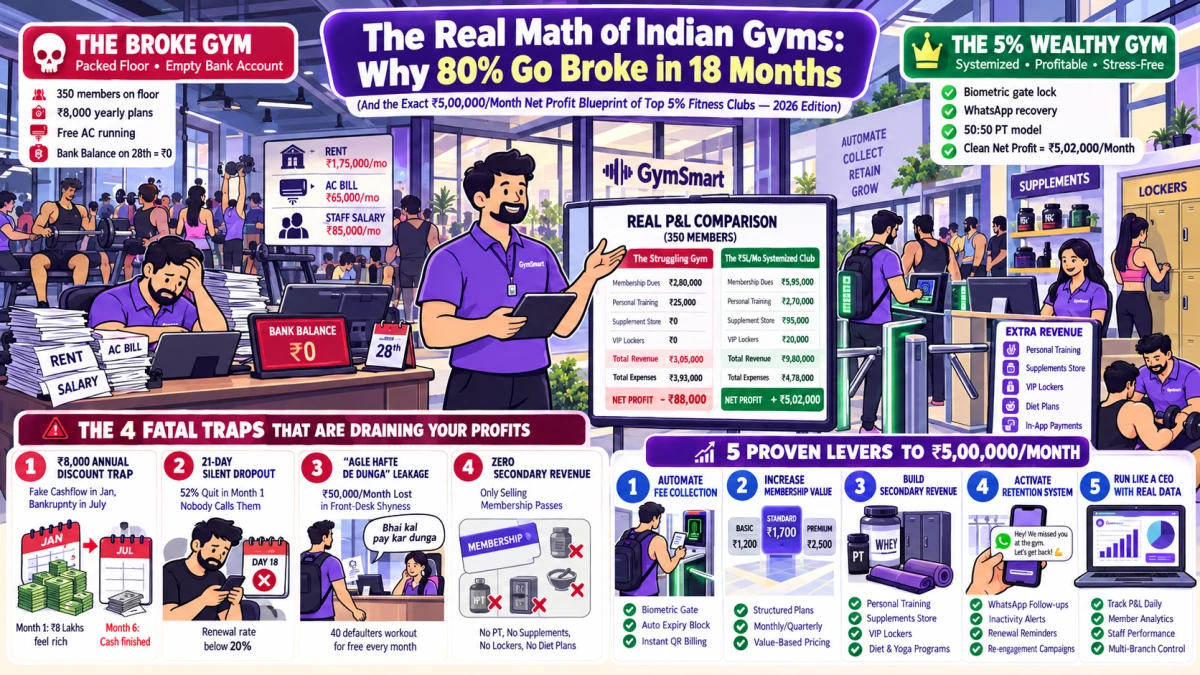
For investors, entering this market through an established gym franchise provides instant consumer trust, architectural blueprints, approved equipment vendor discounts, and national marketing campaigns. However, buying a franchise without understanding true unit economics can lead to cash flow traps:
Gross Royalty Drain
Most franchisors charge 7% to 10% royalty on gross monthly billing (before subtracting rent, trainer commissions, AC electricity, or GST), which severely reduces the franchisee's net cash in hand.
Zero Working Capital Reserve
Allocating 100% of the budget to interior decor and imported equipment leaves no runway to cover 6 months of fixed rental deposits and staff payroll before membership reaches peak density.
Multi-Location Roaming Chaos
Allowing members from sister franchise clubs to access your branch without an automated cross-club billing ERP leads to overcrowding and uncompensated utility costs.
Tired of Fee Defaults, Cash Leaks & Manual Register Headaches?
Join 500+ top Indian fitness clubs running biometric gates, automated WhatsApp fee collection, and 0% commission UPI payouts with GymSmart.
2. 5 Key Criteria to Evaluate Before Buying a Gym Franchise
Before transferring non-refundable franchise agreement fees, conduct deep due diligence across these five fundamental pillars:
1. Financial Transparency & FDD
Request verified Profit & Loss statements from at least 3 existing operating franchise branches in comparable Tier-2 or Tier-1 micro-markets, not just corporate headquarters forecasts.
2. Ongoing Operational & PT Support
Verify whether the franchisor provides certified trainer hiring, standardized group workout curriculums, and front-desk sales conversion training or merely sells the brand logo.
3. Exclusive Territory Demarcation
Ensure the franchise agreement guarantees a strict 3 to 5 kilometer non-compete radius so the franchisor cannot sell another franchise right across the road.
4. Software Stack & Biometric Security
A top franchise must support automated biometric turnstiles, WhatsApp Cloud billing, in-app renewals, and role-based staff privacy locks to prevent cash leakage.
3. Top 10 Gym Franchises in India: Investment, Space & Royalty Breakdown
Here is an objective comparative benchmark of the 10 most prominent fitness franchise brands in India as of 2026:
Legal & Fair-Use Notice: All brand names, trade names, and registered trademarks mentioned above (such as Anytime Fitness, Gold's Gym, Cult.fit, Snap Fitness, UFC Gym, Planet Fitness, Plus Fitness, Talwalkars, Chisel, Ozone) are the property of their respective trademark owners. These figures are estimated benchmarks derived from public franchise disclosure documents and industry surveys in India for comparative informational purposes only. Prospective franchisees must verify current commercial terms directly with franchisors.
4. Financial Model: Buying a Franchise vs. Starting an Independent Gym
Should you invest in a franchise or create your own independent fitness brand with enterprise management software? Here is a realistic 3-year financial comparison for a 4,500 sq.ft gym with 450 active members:
- Upfront Franchise Fee: ₹12,00,000 to ₹25,00,000 non-refundable.
- Monthly Royalty: ₹60,000 to ₹1,20,000 (8% on gross turnover).
- Mandatory Equipment Markup: Must buy from specified vendors at higher prices.
- 3-Year Total Royalties Paid: ₹21,60,000 to ₹43,20,000 out of your pocket.
- Brand Equity: Belongs to franchisor; cannot sell or rebrand easily.
- Upfront Franchise Fee: ₹0 (Save ₹15+ Lakhs on Day 1).
- Monthly Royalty: ₹0 (Save ₹70,000+ every single month).
- Vendor Freedom: Procure direct factory-priced commercial machines.
- Complete Tech Stack: 3 Mobile Apps, Turnstile Gate Sync & WhatsApp Billing for a flat low monthly fee.
- 100% Brand Equity: You own the fitness brand, logo, and member goodwill.
5. How GymSmart Enterprise Powers Multi-Branch Franchise Chains
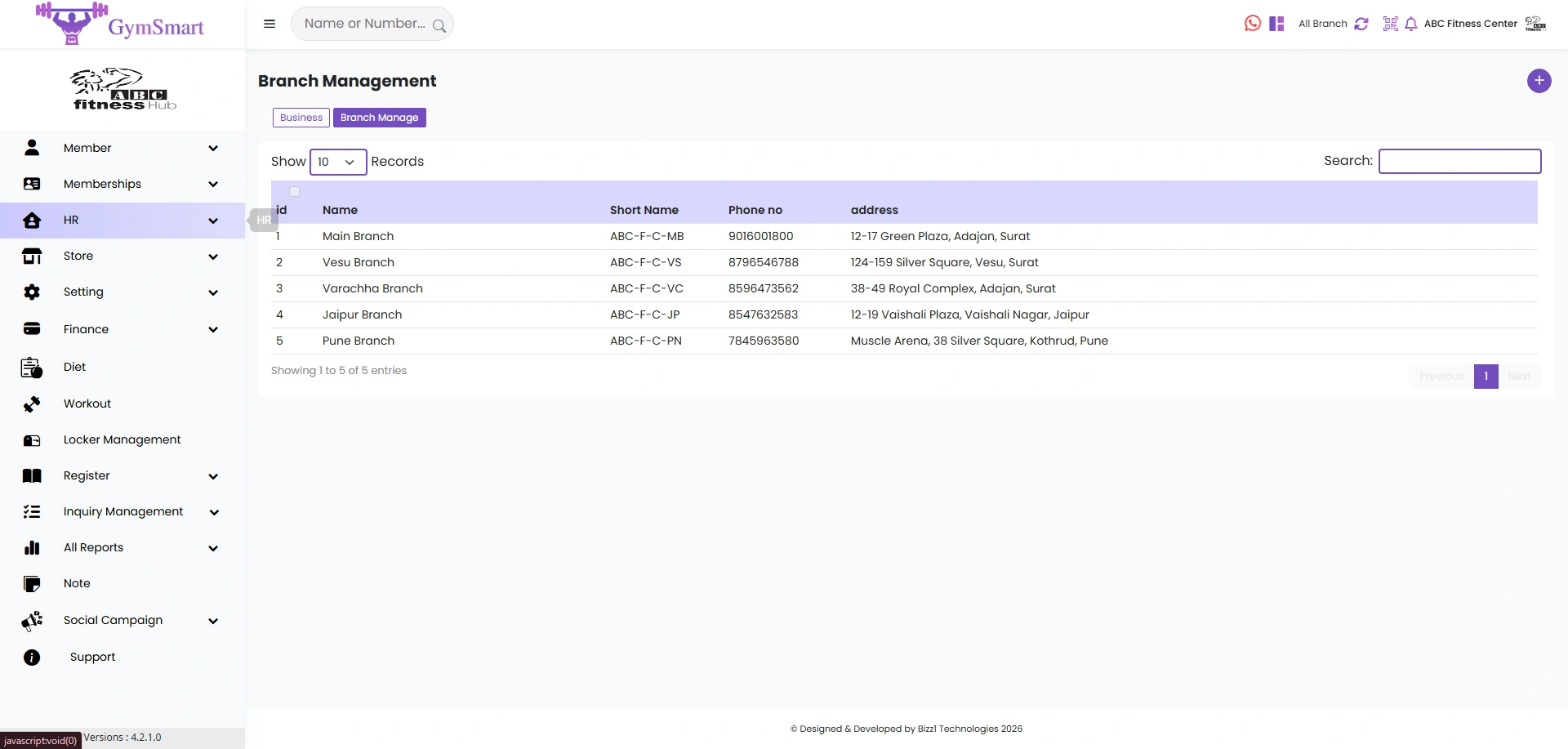
If you operate multiple franchise locations or are expanding your independent brand across several cities, GymSmart Enterprise Central Command unifies all your fitness clubs into a single cloud ecosystem:
Planning a Gym Franchise or Expanding Multiple Branches?
Consult with GymSmart enterprise architects to see how our turnstile cloud ERP, mobile apps, and automated WhatsApp billing empower 500+ fitness clubs across India.
Frequently Asked Questions
Essential insights for fitness entrepreneurs and prospective gym franchise investors in India.
How much monthly net profit does an average gym franchise make in India?
A mature gym franchise with 400 to 600 active members typically generates ₹3.5 to ₹7.5 Lakhs in monthly net profit after deducting commercial rent, AC electricity, trainer salaries, maintenance, and franchise royalties.
Is it financially smarter to start an independent gym brand or buy a franchise?
If you have zero fitness business experience and want instant brand trust, a franchise offers an established playbook. However, if you want higher profit margins, saving ₹15+ Lakhs in upfront franchise fees and 8-10% monthly royalties by launching an independent brand powered by GymSmart ERP delivers significantly superior long-term ROI.
Can GymSmart handle multi-branch roaming for members across different cities?
Yes. GymSmart Enterprise enables cross-club roaming. Members can scan their mobile QR or registered biometric at any club location, while the system accurately records their attendance and maps revenue to their home branch.
What is the standard franchise royalty structure in the Indian fitness industry?
Most commercial gym franchises in India charge either a fixed monthly fee (₹35,000 to ₹75,000/month) or a revenue percentage of 6% to 10% on gross billing. Some brands also charge an additional 1% to 2% national marketing fund fee.
Can gym receptionists or trainers export our franchise member database?
No. GymSmart provides strict Role-Based Access Control (RBAC) with staff privacy masking. Member mobile numbers appear masked (e.g. +91 98XXX-XX123) on branch receptionist and trainer screens, preventing staff from exporting or stealing client contact lists.
What is the typical break-even timeline for a new gym setup in India?
Operational break-even (where monthly revenue covers all operating expenses) is generally achieved within 4 to 8 months with active pre-launch marketing. Full capital investment recovery (Capex payback) takes approximately 24 to 36 months.